BOTTLED

  • “Sometimes the questions are complicated and the answers are simple. Dr. Suess

Friday, July 13, 2012

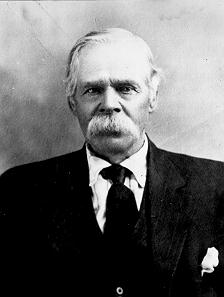
WILLIAM DAVID CAMPBELL death


Died:  13 July 1990 Cardston, Alberta, Canada
Buried: 17 July 1990 Hill Spring, Alberta, Canada


Before my maternal grandfather passed away a few circumstances that were a bit unusual occurred. My grandmother had an appointment with a heart specialist. Grandpa, was to all appearances a very healthy 89 year old.  One of my first cousins had driven them to that appointment. Grandpa had a massive heart attack there at the hospital in the waiting room and was quickly attended to and eventually resuscitated.

Grandpa was not expected to live and visitors were limited to his wife and 10 living children. They were permitted to visit with him for a very short minutes each, one or two at a time, for those first few days. He was a man of strong mind and body. He continued to live for several weeks despite minute by minute medical predictions of demise. 

I paraphrase here an interesting story from shortly after he awoke, as I heard it from several sources. It seems that he was ascending a long stairway and at the top of it were his mother and father with their arms reaching out to him. He said that Parley Merlin and Pearl, his deceased brother and sister, were also there and so was Uncle Ted, a brother he was very close to, and many others he knew and loved. I heard several family members say that he kept saying how good Uncle Ted looked, and that he was still wearing 'that same brown suit'. They were all crowding forward in excitement to see him and greet him but he realized the Grandma Elna was not at his side. He wanted her to share that reunion with him but she was not with him. Finally he noticed her at the foot of the stair and motioned repeatedly for her to come and join him. He was very cross with her, and kept asking her why she would not come, because he felt he could not go without her by his side. 

Elna and Bill [William David] Campell

What a wonderful thing to know how deeply he loved and cherished his wife. How wonderful to know loved ones wait there for us with longing and excitement at the prospect of our coming. I think of excitement in our family at the arrival of a new baby. We bring and send gifts and greetings and are delighted to see pictures or hold them in our arms. Our family, that we miss so much now they are gone, surely watch for us to join them there.

During those last few weeks of life his many, many grandchildren were permitted to begin to visit him in ones and twos, oldest to youngest. I am somewhere in the middle. My turn never came and I never felt like I got to say good bye. At his funeral, I lingered at the chapel after the family left the viewing to go next door to Uncle Allen's for supper. Eventually I was alone with him and the potted plants and other flower arrangements. I needed that time there. 

My grandfather was a big man. Years in the timber, and of hard physical labor, made him rugged and strong but he looked slim. He was so tall that you never noticed how broad he was. He filled his coffin end to end and side to side; his white hair touched the top of the casket and his shoulders grazed each side. Someone later told me that a larger custom build casket would have taken weeks to order and been very expensive. I was glad his last moments showed what a big man he was. 

William David Campbell in camp at Westcastle


Grandpa Campbell, to me, was big in every way: he was kind and gentle and soft spoken, except when he threw back his head and laughed. His laugh just boomed out of that man as grand as he was. His sister Elsie told me once that their father laughed the same exact way. 

He had a wonderful sense of humor. As I stood there by his casket, at a loss of how to say good bye, I suddenly heard a sound like water running. Startled I looked around trying to see what I was hearing. It sounded very near. Just then my cousin, Barry, came in. We espied a single stream of yellow water shooting out from the bottom of a potted plant, onto the floor from about waist high. It looked like the plant was relieving itself. We laughed and laughed and laughed.  It was the kind of joke Grandpa might have thrown back his head and laughed about. I felt like we had said good bye but were still connected by the threads of family that can never be broken. 

Funeral Program of William David Campbell
- I came to know because of these things that happened at the time of my grandfather's passing, of the reality of life beyond here and now. I look forward to the day when I leave behind the pains and cares of this world to be greeted by loved ones there. Maybe he will greet me. I can just imagine that: his eyes would light up and a smile would tug the corners of his lips wide. As I think on it I can almost feel his strong arm pulling me close to his side as he sometimes did - and I would need to reach up and up to put my arm around his waist. 

I know, because of Grandpa Campbell, that we do not cease to exist when we meet death and we will live in happiness in that place, 'at the top of the stairway' with those that we love. They wait there for me.

Thursday, July 12, 2012

DEAR ERIN

We are so proud that you graduated (not to mention some of your courageous choices and actions). 

We are even more proud of your kindness to your siblings and parents and all of us oldsters. 


You are gorgeous!

Inside and out!!


HAPPY BIRTHDAY Beautiful

Love Papa and Grandma FarFarAway


Tuesday, July 10, 2012

DEAR CODY and BENSON

 My youngest sister arrived soon after this picture was taken.
This picture was taken not long after I had my 7th birthday. 

I have 6 brothers -
well 7 actually if you count my foster brother.
He came to live at our house when I was 11.
He was 10.

Four brothers are older than me.
The others are younger.

I also have 3 sisters.
They are all younger than I am.

I like having lots of brothers and sisters.
They are my very best friends -
even if we get mad sometimes.
We still love each other.
We still help each other.
We still watch out for our siblings.

Now we are grown up we live far apart.
I miss them a lot.

Giggles! I think my Uncle Duane had trouble getting a nice picture of all of us.
But I like this one. I am almost 10 years old in this picture. 

My brother Tim is one year older than me.
I am 1 year and 3 days younger than he is.
Sometimes we got to celebrate our birthday together.

When we were little he was very sick.
When he got better it was very hard for him to do lots of things.
He had to work harder than everybody else.
Sometimes it took him a long time to do things.
We were in the same grade at school.
He is very special to me. I love him very much.
He is a good example to me.
He is always very kind to others.

I hope you love sharing your birthday with each other.
I hope you are always kind too.
Having a brother to share things with is very nice.

HAPPY BIRTHDAY!!
I miss you too.
Love Grandma


Wednesday, July 4, 2012

WITHOUT COUNTRY


Happy 4th.

Outside in the neighborhood there are fireworks everywhere. 

Family.
Home.
Country.


If these were denied, could you still be?


David has been searching for a movie, he saw in the past, titled 'The Man Without A Country'. He would like to watch it again. I haven't seen it.  He found an audio recording of the book of the same title by Edward Everett Hale.

This complete and unabridged version from Hale's 1868 story collection includes many incidents cut from textbooks, as well as an illuminating introduction by the author which reveals unknown facts about the tale. 

We listened to it Monday night for Family Home Evening. 
It is less than an hour and a half long, and riveting.

I recommend it highly.

An American Army officer curses his country during a court martial and wishes to never hear of it again. That becomes his punishment. He spends the rest of his life on board a ship at sea. He is basically a 'free' prisoner but in that one way - all references to the United States are kept from him.

Some streets here have a flag at every house! 

IMAGINE!

What would it be like to have no home?
No Country?


Monday, July 2, 2012

BITS OF CANADA

Having been born in Canada,
and having lived there much of my life,
I notice Canadian 'trivia'.


Near the end of May while hiking in Washington state with my husband and son we came across these. Unless you are Canadian you may not even know these screws are common there.


They were screwed into a 'stretching bar' about half way up a steep trail. We had a good laugh - how does a Canadian screw find its way into this simple project a mile up a mountain? Perhaps sensible people everywhere are learning what a good thing they can be (see details below).

My son NEEDED that stretching bar - he hiked that hill backwards!

Robertson screws are common in Canada. Screwdrivers there with interchangeable bits ALWAYS have a selection of Robertson's in various common sizes.
-
Silly I know, but such things often make me somewhat homesick. I suppose Canada, even in little 'bits' will always be 'home'.


A Robertson, also known as a square, or Scrulox screw drive has a square-shaped socket in the screw head and a square protrusion on the tool. Both the tool and the socket have a taper, which makes inserting the tool easier, and also tends to help keep the screw on the tool tip without the user needing to hold it there. (The taper's earliest reason for being was to make the manufacture of the screws practical using cold forming of the heads, but its other advantages helped popularize the drive.) Robertson screws are commonplace in Canada, though they have been used elsewhere and have become much more common in other countries in recent decades.

Robertson screwdrivers are easy to use one-handed, because the tapered socket tends to retain the screw, even if it is shaken. They also allow for the use of angled screw drivers and trim head screws. The socket-headed Robertson screws are self-centering, reduce cam out, stop a power tool when set, and can be removed if painted-over or old and rusty. In industry, they speed up production and reduce product damage.


Sunday, July 1, 2012

CANADA CELEBRATIONS

Signs are posted in multiple languages - 
all announcements are in French and English

We visited Canada last week.


We flew 'Air Canada' Jazz/Express. 
The planes have a large maple leaf on the tail.
There are several styles and colors.
Some are red, some orange, some green. 
We flew on a red and a green. 
Much better than driving 27 hours north. 
Special thanks to our daughter for sharing her air miles!


We had the privilege of hearing 'O Canada' sung by Chris Baumeister at our granddaughter's high school graduation ceremony. He has a superb voice and is bilingual English/French.  He was also graduating. He sang parts of the anthem in both languages. Congratulations to all the grads and especially to Erin. 

Canada is unique in many ways. 
It is always a pleasure to visit.

Mountie and me 

Royal Canadian Mounted Police escorted graduates attending prom into the hotel used for the party. It is easier to screen out alcohol, drugs and weapons that way. I love RCMP formal 'dress' uniforms. I requested a picture with one of the officers flanking the entrance. (My daughter was one of the super mom's that helped arrange Prom, decorate and supervise (with her husband).  

On our way home we happened upon another fun RCMP officer in the Vancouver airport. A kind 'Canadian' offered to take a picture of us together. 

Surprisingly similar ... carved, painted Mountie figure

Happy Canada Day to my native land. 
Set off lots of fireworks for us this week.
We got to sing the anthem but now we are 'home'. 
You will have to celebrate without us! 

Saturday, June 30, 2012

ANGELINE VILATE STEWART history


Special thanks to Lana Archibald for her work (see links in text below) digitizing and publishing many documents and photographs of this family in ways that help those histories and photos to be available to all of their descendants.

Angeline Vilate Stewart 

Born: 30 June 1874 Clarkston, Cache, Utah, USA
-
In an 11 page, handwritten history of his mother titled "The Story of My Mother", Angeline's son Ruben David Buttars wrote that his mother "was fifth in a family of twelve, seven brothers and four sisters. ...My mother was always called 'Angie'. Her parents lived in Clarkston just west of the town square." 
-
[Another similar history at 'Ancestry' tells us this was "... west across the road from the Clarkston meetinghouse that now stands."]

Samuel Thompson Stewart

Father: Samuel Thompson Stewart (1844-1932)
Sarah Marble Stewart, wife of Andrew Stewart (1883 - brother of Angeline Stewart) tells us, in a 3 page biographical sketch, that Angie's father Samuel Stewart was a man of good cheer that often told his family stories about pioneer life. His mother died when he was 12 and at age 13 he was apprenticed as a plumber.

Angie's sister-in-law Sarah wrote, "On March 14th, 1862 [at age 18, Samuel Stewart] left his native land [Scotland] and started for America. ... He was five weeks and three days on the ocean. [His immigration record states 'Arrived NewYork City 12 June 1862. Took Railroad to Florence, Nebraska Territory.]
-
"At Florence, Nebraska he was delayed for six weeks waiting for teams to start to Utah. He was successful in getting a job driving six yoke of oxen on a heavily loaded wagon of merchandise. [In August 1862] He traveled with [Ansel P.] Harmon company which had fifty-two wagons, four to six yoke of oxen to the wagon also eighteen people to each wagon, so that they had to walk much of the way. Grandfather had a number of girls riding with him…. His quick thought and courage and clean good humor made him a general favorite." 

They arrived in Salt Lake 5 October 1862.
-

Mother: Mary Ann Clark (1847-1916)
Daughter of Joseph Owen (Onion) Clark and Ann Clark
-
From a brief history of Mary Ann we learn, "As a seamstress, Mary Ann's mother [Ann] was gone much of the time, so Mary Ann took care of the house and older children. Her mother demanded strict obedience of her children and administered very severe punishment. … Her father was the opposite -- patient, kind, and pleasant.

Mary Ann was short, only five feet tall, and had brown, curly ringlets. She was much like her father in temperament."

Sarah Marble Stewart continues,"[Samuel] arrived in Salt Lake City ... 6 months after he left Scotland with only six bits (75 cents) in his pocket, no home, now where to go. ...
-
"He soon found work in Sugar House Ward and so steadily did he work and so carefully did he save that with some advance wages he was able to send to Scotland that first year $500 in gold to bring his loved ones to Utah. 
-
"During the time he had been in Utah he had met Mary Ann Clark ... So not long after that [16 April 1864] they went up to the Endowment House. While waiting their turn, Heber C Kimball asked Grandfather if he was taking his wife through. Grandfahter said, 'No, my gal.' They were married by Wilford Woodruff.
-
"They lived in Salt Lake City, Utah until about 1867 when they moved to Clarkston, Utah. Here they lived doing their part in building a new community.
-
"Grandfather received a call on a mission to assist in building the Logan Temple which he fulfilled. Always inventing things to make things handy, he made a sawmill and a gristmill run by a water wheel in the Creek. He also made caskets, covering them with black velvet. One day he made a casket, got into it and sent for Grandmother to come and see if it would do.
-
"He was with John and Thomas Godfrey when Martin Harris gave his last testimony of the truthfulness of the Book of Mormon..."
-
Clara Stewart Richman, sister to Angeline, wrote that their father "Samuel Stewart was elected constable of the community in August 1868." She also tells us "Samuel was about 5' 10" tall, with black hair, dark eyes and a very fair complexion."

Aunt Sadie (as Dad Ames called Sarah Maud Buttars Hansen - Angeline's daughter) recorded, on a family group sheet prepared in 1979, that Angeline was baptized when 8 years old.

Baptized: 1 July 1882 

Her son Ruben wrote in his history of Angeline: "The family attended church in the rock church house on the east side of the square, just a block from home. She was baptized 1 July 1882 in a stream north of Clarkston, known as Big Creek."


At age 9 we see Angeline on the 1880 US Census in Clarkston, Utah with her parents and siblings. Although the older children are marked as having attended school Angeline is not. From her son Ruben we learn "She went to school in a little frame school house, just across the street from her home. She only has a sixth grade education. Later her father bought a farm two miles north of Clarkston, where she lived until she got married. 

"Mother and Father grew up in the same town. He was three years older than she and began going out with mother's sister Julia Ann. As families do, they teased Julia about Charles Buttars and she said she didn't think she liked him well enough to marry him. Then mother said, 'Julia, if you don't want him, let me have him.' Soon after that he called and took mother buggy riding. At that time mother was only sixteen."


Spouse: Charles William Buttars
Married: 18 May 1892 Logan, Cache, Utah, USA

Sarah Marble Stewart tells a significant family event of that approximate time,"One day the lightening struck the house. Grandfather [Samuel Stewart - Angeline's father]was knocked unconscious. This was on Friday afternoon and he did not get much better until he had been prayed for in Sacrament meeting Sunday afternoon. Alice Dahle was in the room standing near a looking glass, she lost one eye and about 500 pieces of glass were taken from her body from her waist up. It wasn't long after this in the spring of 1893 that he moved to Wilford, Idaho. ..."

Other sources say "Samuel and Mary Ann Clark lived in Clarkston, Cache county, Utah until 1894, three years after their youngest child, Clara Elizabeth Stewart, was born. Then they moved to Wilford, Idaho.

Mary Ann had not wanted to move, but after their Clarkston home was struck by lightning, breaking all the windows, and injuring several family members, they decided to go to Teton, Idaho. Two of their married children were already there; most of the other children went with them, but their daughter, Angeline Vilate Stewart remained behind to marry Charles William Buttars." 
-
Pictures show us this family were close enough to gather for a family picture as adults. 
-
Clothing in this photo appears to be a conservative 'flapper' style circa 1920

The five daughters also pose together for several 'sisters' pictures.


Died: 30 May 1931 Clarkston, Cache, Utah, USA
Buried: 2 June 1931 Clarkston, Cache, Utah, USA

Friday, June 22, 2012

DEAR QUINTON

Papa and I hope you have a wonderful birthday today.

Clover can hide rocks, squeeze out all other plants and reseed by the billions

Among my flowers I have the stepping stones my grandchildren made for me. As I care for the flower bed and weed around each stone I think of each child. Sometimes that takes hours. Today I weeded around your stepping stone - it took hours. I thought a lot about you. I prayed for good things and happiness for you and your family.

If I do nothing but wait for flowers, weeds take the sunshine and water and choke out the flowers.  To enjoy pretty flowers I have to constantly pull the weeds and grasses, roots and all. I also have to loosen the soil and water. Clover seemed bent on taking over the section your stone is in.

A seed (green cluster center left) forms from each yellow dot on the clover
flower (right). One clover plant makes thousands of seeds each time it blooms. 

Raising flowers is like reading a good book. I must learn how and then do it. To read, first we have to work to learn the alphabet and sounds. We have to do more than wish we could read. And after we learn to read we have to actually choose a book and get it and pick it up - not just leave it lost in a pile somewhere and then we have to read each word, paragraph and page.


Where is Quinton?
Tedious weeding on the front right corner begun - just starting yesterday - I quit!

I have to do more than wish I had flowers. I have to plant bulbs and seeds or seedlings. I have to pick the right kind for the right places and plant them at the right season and be sure they have enough light and water - but not too much. Then I have to wait patiently for them to grow before I get to enjoy the nice smells and pretty colors. 

Can I stop when clover is cleared from beside the rose? 

Even after the flowers grow I have to still watch over them. Sometimes bugs eat them or kill them and sometimes people trample them.  Sometimes I can fix that but sometimes I can't and I have to start again and even sometimes AGAIN. 

What about when the stone is uncovered? Can I stop weeding now?
-
I don't mind weeding and planting. I am glad I can see how plants and things grow. Did you ever wonder where all the stuff a tree is made out of comes from? or a piece of fruit? -

Although lots of clover grew no other seeds did. After the clover was gone I added 
a few new flower seedlings from other places where too many flower seeds grew.

Look at the little footprint on your stepping stone. How did your foot get so big? What is it made out of? Where did those things that make your feet come from?

Footprint from a long time ago. 


You like to read books. We do too.
 We like to read all kinds of books.

I have many 'favorite' books.


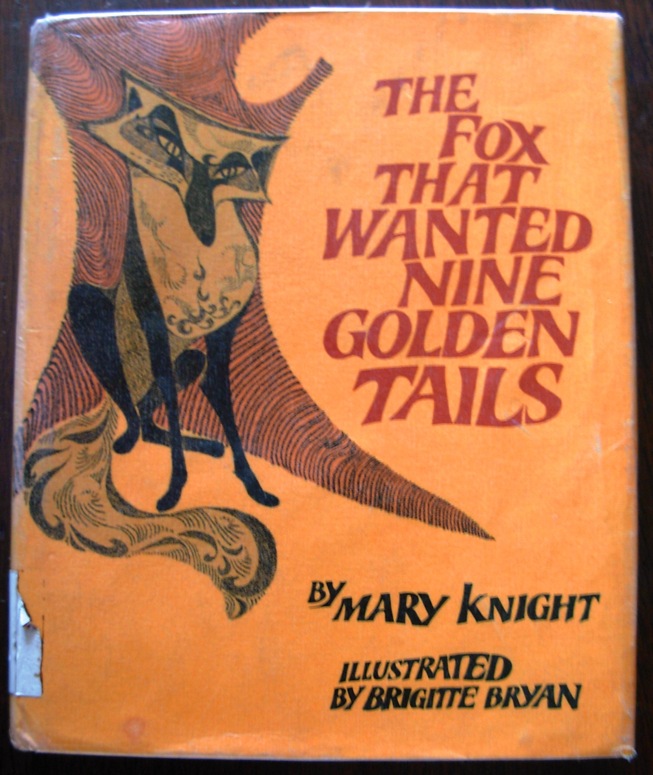
There is one that I think you might, in particular, enjoy. It is called 'The Fox That Wanted Nine Golden Tails' by Mary Knight. It is a fun little square book.

You can borrow it from us, get it from a library, download it from the internet, or even buy it - it is worth owning. BUT you may want to read it - that way you know how much you like it and if you want to read it over and over again! 

Here on my blog I have a list of some of my favorite books. I recommend reading them all. You can borrow any of them from us if you want to. Papa could drop them off to you on his way to or from work and trade a new one to you when you finish each one.

Oh - and by the way - be sure to tell us the names of any good books you read.  It would be fun to read a book you like!
Love Grandma and Papa


Thursday, June 21, 2012

DEAR TAD

LOVE YA!

MISS YA!

WISH WE COULD VISIT!

HAPPY BIRTHDAY!

I was thinking the other day that you are almost as old as I used to be. Hope you are getting younger too ...


I found this fun picture of you and I, and Kimber. It sure brought back a lot of memories. At that time I wished so much to see you before you flew out to Switzerland but didn't know of any way I would be able to. Then miracles and blessings came so instantly, in ways I could scarcely comprehend and I was able to visit mom and dad, AND see you go, all in one short time frame. Memories ... sigh ... really do miss you, my son. Love Mom

Saturday, June 16, 2012

IDEALISTS

i·de·al·ist [ahy-dee-uh-list]
noun
 
1. a person who cherishes or pursues high or noble principles, purposes, goals, etc. Synonyms: optimist, perfectionist, reformer, visionary, utopianist. Antonyms: pragmatist, skeptic, cynic.

2. a visionary or impractical person. Synonyms: romantic, romanticist, dreamer, stargazer. Antonyms: realist, materialist.

3. a person who represents things as they might or should be rather than as they are: My friend is an idealist, who somehow thinks that we always agree.

4. a writer or artist who treats subjects imaginatively.

5. a person who accepts the doctrines of philosophical idealism,  as by representing things in an ideal form, or as they might or should be rather than as they are, with emphasis on values.

I know many idealists.
Most of them are much younger than I am.

To me it seems that most children are idealists. I notice idealism is particularly pervasive in the decade between age 8 and 18.  Is that a good thing? 

Would you rather be an idealist, an optimist and reformer, or a pragmatist, skeptic and cynic? A person pursuing principles and purposes? or someone concerned primarily with the world as it seems to be and with how that perceived reality affects you?

I hear some adults that seem determined to disillusion every hopeful aspiration in not only youth, but even in young children.

Why?

Do we feel a need to instill 'reality? There is no Santa Claus, no Easter Bunny and no tooth fairy! Can we not even allow ideals of belief, generosity, and hope? Must we pass our own fears and despair onto their slight shoulders even before they gain strength or maturity?

Is there not time enough for us to comfort our young through failures of hopes and dreams? Might we not grant them, first, at least an opportunity to attempt to astonish despairing disbelief with wonderful schemes?

They often succeed where we have given up!
They often succeed by merely trying!
 Do we need to crush such good cheer?
Can someone smile too much?

Is it so important for anyone to know man's inhumanity to man?

I perused the synonyms and antonyms listed in the definitions above. Which would I rather be? Do I mock or encourage?


Friday, June 15, 2012

CHARLES WILLIAM BUTTARS history


Born: 15 June 1871 Clarkston, Cache, Utah, USA

David Buttars and Sarah Keep
-
Father: David Buttar (1822-1911)
Son of  Donald Buttars and Betheah [Betty] Rattray

Mother: Sarah Keep (1840-1936)
Daughter of James Joseph Keep and Ann Miller

David Buttars family circa 1900

Papa's great grandfather, Charles William Buttars, was born into a 'blended family'. His father's first wife (Margeret Spaulding 1822-1863 and a newborn infant daughter, Margaret -1863) joined a young son (David 1853-1854) in death, leaving behind 5 more children for her widowed husband to raise - 2 girls and 3 boys, Margery Meek Buttars, Bethea Buttars, John Spalding Buttars, Daniel Buttars, and Robert Souter or Sutter  Buttars. 
-
David Buttars 1822 -1911 father of Charles Wm Buttars
-
In March 1866 his mother, Sarah, fled a marriage in London of about 1 year, with an infant daughter, Lucy. In a history (she wrote) Sarah said, "At the age of eighteen I was self-willed and thought about marriage. My father told us older girls not to get married until we came to the valley. Although I had a great desire to get to the valley, thinking it would be a Heaven on Earth, yet I thought I would please myself."


Sarah Keep 1840-1936 mother of Charles Wm Buttars

Her parents, the Keeps were converts to the Church of Jesus Christ of Latter Day Saints and counseled their daughters to not marry until they had emigrated from England to join other church members in Utah. In her history Sarah details a dream she understood afterwards to be a warning to obey her parents. It influenced her eventual decision to abandon her marriage.

Sarah then explains, "At the age of twenty-five I married against my parent's wish and they didn't know it for six weeks. Then to my sorrow I found out that my husband had just joined the church to get me, for my father had said I should not marry anyone out of the church. This was his council and I disobeyed him. When I was married my husband told me that it had been my day, but now it was his day. ... My husband told me that if I went to see my folks off that he would push me overboard."
-
Details of Sarah's difficult decision are available in a story titled 'Sarah's Choice'. It was written by Shauna Balls, a descendant, from Sarah's own journals. She also has many original pictures and journal/ histories.
-
Her parents and family were leaving England for America - perhaps never to be seen again. She loved her husband but he did not want to share her faith. She held very strong convictions that The Church of Jesus Christ of Latter Day Saints was led by a prophet with authority from God as the Bible described Christ's church. She also believed that her daughter should be taught these truths.
-
She made many sacrifices to live the principles she knew to be right and true. Some of the history of David Buttars and his wives and family may be read in a history written in 1911 by Lucy Ann Jensen, Sarah's first daughter, (with additions from one written by Archulious B. Archibald and other family histories). Images of Sarah's original hand written pages of history are kindly provided at no cost and may be viewed at a site maintained by Lana Archibald.
-
When just a boy David apprenticed as a shoemaker and initially, upon arriving in Utah about 1854, made it his profession. Lucy's history of their father and Margaret records, "After a year or two, he raised a team of oxen from calves. He then began to farm a little and that year the crickets came and devoured the crops. There was no flour to be found in Lehi. As they had no flour, they ate bran bread and clabber milk. ...
-
"With time, conditions in Lehi improved. ... eight years ... [later] Margaret passed away five days [after a birth] at the age of forty one. ... David saw some hard, sad times and had no relatives to help him to care for his little family. David’s daughter Marjory, just 14 years old, helped to take care of the other children."
-
To homestead land, one had to live on the land at least six months of each year, for five years. Parcels for homesteading were generally 160 acres or 80 acres. The land was covered with sagebrush, chock cherry and other kinds of trees. It took a lot of hard hand labor to clear them away. Settlers often cleared a little more each year and planted it. 
-
Sarah met and married David Buttars soon after her arrival to Utah at the home of her sister Mary. We do not have a record of the dissolution of her first marriage. David proposed to Sarah as they walked home from the wedding supper of his oldest daughter Margery.
-
Lucy tells us her parents "... were married December 16, 1866 by their bishop in Lehi. David was forty four years old at the time and Sarah was twenty six. ... David adopted Lucy, and Sarah raised his children as if they were her own. His children were well taken care of and got along nicely with their stepmother, Sarah. They loved and honored her as they would their own mother."
-
The first child of Charles parents, a daughter they named Sarah Isabelle Buttars, died a few weeks after her birth at Lehi, Utah. Sarah tells us of the tragedy, "... [Our] first child ... died and was buried in the garden until David came home. There she had been dead eight days. David and I buried her ourselves in the graveyard of Lehi. My husband had been to Clarkston to buy us a home. This was June 1868 ..."
-
Lucy says, "In the fall of 1868 David was ordained an Elder and in October moved his family to Clarkston, Cache County, Utah. He built a two-room log house in the fort. Peter S. Barson lived on one side of him and James Myler on the other."
-
Sarah also tells about moving and their struggles to settle in Clarkston. " In October 1868 we moved to Clarkston, Utah. That fall the grasshoppers were so bad that we cut up a cow skin and made a rope which three of us dragged up and down the garden to make the grasshoppers fly away and keep them from cutting the grain. 
-
"There were so many that when they were flying they would darken the sun. ... In [June] 1869 my third daughter was born [Elizabeth Keep Buttars]. Two more years we fought the grasshoppers and the crickets. (In 1871 there were seven clouds of crickets and three clouds of grasshoppers that came and ate everything up). June 15, 1871 my first boy, Charles was born, and eight days after on June 23, 1871 the seagulls came and ate all the grasshoppers and crickets."
-
Charles arrived with the crickets, grasshoppers and gulls, as his ready made family consisting of siblings, step-siblings and some of their children, struggled for their very existence. See other links below.
-
In a history of Daniel Buttars, a step-brother (written by his daughter, Archulious B. Archibald), we learn more about the Buttars family life at Clarkston, Utah. "1871 was a difficult year in the settlement as the Indians became a menace again. It was during this time that Daniel's brother Charles William was born ... As spring passed into summer, the crops were just getting established. That summer the crickets devoured their crops three times. Three times the seagulls descended on the fields and devoured the crickets. The Crickets were so bad that Daniel (who was twelve years old) and his brothers and sisters each took the ends of a rope and drug it over the grain to drive the crickets off for the night to spare the grain. Three times they replanted their crops and in the fall, his father harvested a record crop of 1,300 bushels of wheat.
-
"During the 1870s the hardships of pioneer life began to ease. New homes were built, accompanied by barns, granaries, and gardens. A woolen mill was erected. And a rock meetinghouse was completed and in the 1880s a two room schoolhouse built. Life was good in Clarkston ... while the family was living in the fort...
-
"By 1880, most of the Indian troubles were over. The family moved out of the fort and built another two room house on their farm north of Clarkston ... Daniel worked on his father's farm and on the railroad. When he was twenty-one years old [1879], his father gave him a team of horses, a wagon, a new pair of homemade overalls, and a quilt. Daniel moved out of the home and went to live with his brother John and his wife. Being a small community, everyone knew everyone else.''
-
A great granddaughter,Lana Archibald, kindly provides descendants with access to much information and many photographs on a free website she maintains. She has compiled many records and writes, "Charles William Buttars ... was born in the house, north of town, on the hill (known as Buttars' Estate). His folks were early pioneers to Clarkston, coming from England and Scotland. They came to the mountains in Utah because of their religious beliefs, traveling by handcart across the plains." 
-
Lucy's history (found on Lana's website) continues, "In 1870, they moved out of the fort onto [David's] farm. There [father] built a two-room log house, and later he built a new two-story white frame house in its place. 
-
"They decided to sell their home in Lehi and make Clarkston their permanent home. Sarah and David made the trip to Lehi to sell their home with a team of horses and a wagon. The found a buyer for their home, and took some produce as partial payment. One of the items was several bushel of apples. The rough ride back to Clarkston in the wagon bruised the apples so badly that they rotted immediately.

"David and Sarah used their pioneer skills and removed the seeds from the decayed apples. The following spring they planted the seeds in long rows on the slope south of their house. Many of the seeds grew. When they were about three feet high he thinned them to the right distance and gave many of his friends some of his young apple trees. He visited other apple orchards in the valley and got buds from other kinds of apple trees, which he grafted onto some of his own trees.
-
"Budding was done by carefully cutting a cross in the bark of the tree. The bud from another tree was placed in the cut; the bark was carefully put back into place. The cut was then bandaged with a piece of cloth. When the bandages were removed in the spring some of the grafts were green and promising, others were dry and dead. Enough survived to provide about a half-acre orchard.
-
"David sent to his native Scotland for some gooseberry seeds. His sister sent three different kinds. She had spread them out on sheets of paper to dry; they stuck to the paper. She carefully labeled the seeds and folded the paper with the seeds still sticking and mailed them to David in Utah. The Gooseberry seeds were planted between the apple trees. They grew well and were of a good variety. The orchard was a pride and joy to David and Sarah for many years.
-
"By 1870, all of the settlers had moved out of the fort and others began to arrive. As Clarkston grew, David helped to build the Old Rock church house, which was erected in 1870 on the south side of the Town Square.
-
"In 1871 he was ordained a High Priest. He believed in paying a good tithing and paying it in full, knowing the Lord keeps his promise that he would open the windows of Heaven and pour down his blessings on all that keep his laws and commandments, for he had proved it to him in the spring of 1871.
-
"The cricketts came so bad that when they flew up they would darken the sun, and three times they ate destroyed the crops. Then the crickets came in herds; there were herds of them, one right after the other. After he had done all within his power by driving them, with his children’s help, to the ditch where the chickens could only eat three or four because they were so large, then he did not know what to do for a living because everything had been devoured. 
-
"He said, 'We will raise something. I have paid my tithing and the Lord will help us. He has said he will help them that help themselves.' He replanted his crops and the cricketts returned. Then here came the seagulls and devoured the cricketts. They would eat until full, then go to the ditch and throw them up, then eat more until they were all gone and then they would fly away. The grain grew again and David raised thirteen hundred bushels of grain, the largest crop he had ever had up to that time.
-
"...When David first started to farm he cut the grain with a cradle; a few years later he bought a cropper to cut the grain with and hired six men to flaw it and bind it. He used to cure his wheat for planting with slack and lime and broadcast sowed it by hand. [An old dictionary defines 'flaw' as a small piece or fragment - used like to cut or flay.]
-
"David made shoes the first few years in Clarkston. He used to mend all their harnesses. He used wooden pegs for tacks to put soles on, made out of maple, sawed in little wheels, then cut into little pegs. He also made wooden lasts to make the shoes on. The last pair he made was for his stepdaughter Lucy Ann, and he accidentally made one wrong side out. He said, 'I won’t make any more shoes,' and he never did.
-
"In the early 1870s, David had a white frame house built. It was large by all the standards of that day. A two-story house with a porch along the front; three dormer windows on the second floor facing east, and two dormer windows facing the south with a veranda below. It was a beautiful house, and overlooked their land and gave a commanding view of the valley."
-
David Buttars home
Lana Archibald's history of Charles tells an unusual story,"When [Charles] was about four years old, his finger was accidentally cut off. His mother buried the finger. A few days later, he was crying and saying 'the worms are eating the end of my finger.' So they dug it up and found that the worms were in it.

"Charles got his schooling in Clarkston, in the log school house on the south corner, across the street from the southeast corner of the town square. He completed the five Readers, and his Arithmetic, and took a penmanship class given by Alfred White.
-
"Some of the boyfriends in his youth were David and Willie Sparks and Isaiah Thompson [all relatives]. Together they pulled a Halloween trick one night. They tied two tom-cat's tails together and hung them over the doorknob at the bishop's house.

Lucy records, "[Father] was a progressive farmer, always looking to utilize the latest methods and machinery. He bought the first binder in Clarkston. His son Daniel and William Stokes bound on it by hand one year. Then Samuel Thompson and Daniel, bound another year. Then he bought a self-binder that bound with wire. Years later he helped to buy the first header that came to Clarkston, together with Andrew W. Heggie and Peter S. Barson. One year he had sunflowers so bad in some of his wheat that he put it into a stack by itself, and when the thrashers came, they would not thrash it for him. He made a flail and flailed it out by hand, a bit at a time on a wagon cover.
-
"He had to haul his grain to Corinne or Ogden by team and wagon to sell it. He would bring back the things his family needed. It would take two and three days to make the trip. He had cows, horses, sheep, pigs and chickens. He also used to plant five to ten acres of potatoes each year. ...
-
"When the Logan Temple was being built, he donated one hundred dollars each year until it was finished. David and his wife Sarah did temple work for many of their ancestors and paid for hundreds of more names to be done. ...
-
"On June 11, 1884, he married Sophia Jensen as a plural wife. She was a forty three year old single mother from Denmark with two teenage sons, John Hansen (21 Jul 1867) and William Christian Hansen (30 Oct 1870). She continued to live in Logan with her two sons for a time. By 1900 she was living in a rented house next to David and Sarah. David's relationship with her was more that of a caretaker. In 1889, the polygamists were advised by the authorities of the Church to give themselves up instead of being hunted down by the law. On the first day of June 1898, David gave himself up and was fined one hundred dollars. On account of his age, he did not get the six-month jail sentence usually given; he paid his fine and came home a happy man. When the practice of plural marriage ended, to satisfy the request from the Church and the demands of the law, David and Sophie were divorced. However he did continue to support her."
-
Charles William Buttars was born and lived surrounded by loving family members. He had two patriarchal blessings in his life, one as a small boy and one in later years.
-
Baptized: 31 July 1879
-
US 1880 Census Clarkston Utah Charles William Buttars age 9
This record shows that he did not attend school the previous year.
-
Spouse: Angeline Vilate Stewart
Married: 18 May 1892 Logan, Cache, Utah, USA
-

Lana Archibald's history gives us several other important dimensions of our great grandfather's life, character and personality.  "Charles courted Angela Stewart on his pony. He first went with her sister Julie. Angie was attracted to him and Julie wasn't, so Angie asked Julie if she could have him. At the age of 21, Charles married Angeline Vilate Stewart in the Logan LDS Temple, sealed for time and all eternity. They were married May 18, 1892. Angela was 18 years old. ...
-
"Charles' life was his family and his horses. ... 
-
"Charles loved his horses as few men do. He doctored them, put them in slings, and ruptured his own side doing it. His horses were beauties and understood his every word. He ran hundreds of head of horses on the range for other people, up in the mountains above Clarkston where they got summer feed. His own little pony "Little Bolly" he rode with pride, a beautiful bay who was eager to respond to the touch of his hand. The people of the town could tell when he was coming by the rhythm of his horse's footsteps. ...
-
"He farmed well, an inherited characteristic of the Buttars family. Charles' home and surroundings were scrupulously clean and wholesome. "The Buttars" were know as good citizens, good managers, hard workers, very progressive and loyal people to the community they lived in. They helped it to grow. He was loved and respected by all who knew him. He stood for what was right and honest to the core, regardless of the cost. He was cheerful in disposition and loved to talk and visit with people. He often would sing or whistle. He was always aware of others' needs and was on hand to offer himself or what he had. He was an advisor to many. ...


Charles William Buttars 1871 -1908
-
"He was a well-built man, six feet tall in his stocking feet. He had strong square shoulders, dark wavy hair and grey-green eyes. ...
-
"Charles' mother, Sarah Keep Buttars, lived in Clarkston, too. He was a very dear son to her. He often went to see her. She had many flower gardens around her home, and when Charles got ready to leave after a visit, she would tuck a sweet pea in his hat band. ..."
-
Died: 5 October 1908 Clarkston, Cache, Utah, USA
Buried: 10 October 1908 Clarkston, Cache, Utah, USA


See other links about pioneer grasshopper/cricket problems here or:
Farming the Plains http://www.slideshare.net/DHUMPHREYS/farming-the-plains-problems
Kansas http://www.kshs.org/kansapedia/grasshopper-plague-of-1874/12070
Minnesota http://www.rootsweb.ancestry.com/~mnbecker/ch31.php
Nebraska http://www.memoriallibrary.com/NE/Antelope/1868/nine.htm