BOTTLED

  • “Sometimes the questions are complicated and the answers are simple. Dr. Suess
Showing posts with label Wallace Will Ames. Show all posts

Saturday, November 24, 2012

THE WORK OF WALLACE WILL AMES


Papa has written about the work his father did and graciously agreed to be a guest blogger in honor of his father's birthday - Saturday, 24 November 1921. Special thanks for sharing, David. 

1965 Wallace Will Ames

"My father told us stories; stories of his childhood; stories of War, of blessings, of work and of whatever came to mind in the situation which inspired the memory.  We loved to listen.  He stories were real life true adventures which he had experienced. 

"My father worked and taught us by precept and example how to do the same.  He tells about plowing with his uncle’s unmatched horses.  When the horses got to the end of the row, they could not work together to turn the plow to go back the other way.  While uncle went to get a whip to help the horses, dad - just a young boy - unhitched one, turned the plow with the other, then hitched them back together.  Uncle was not grateful and warned him severely about spoiling his horses. 

"The first job my father ever told me about was working for a Greek restaurant.  We loved hearing him quote his boss, “Don’t say nothing for the Greeks.”  His boss was a man who was ready to defend his people at all times.  Working for the Greeks Dad became one of his people.

"When Dad first started, all of the other workers spoke in Greek when they didn’t want him to understand what they were talking about.  He decided to do something about that.  While he went about his work from day to day he would listen carefully to what they said.  One day the boss said something and Dad answered in Greek.  After the initial surprise, disbelief, “Who taught you to talk like that?” and denials that such a thing was possible Dad became a Greek.  The boss finished teaching him how to speak that language. 

"His ability to acquire a language would serve him well in the military.  When he was about 17 he joined the National Guard 1. His older brother, Charlie, was in the CCC’s (Civilian Conservation Corps).  Before Dad turned 18 World War II had begun and he wanted to join the army.  The Guard did not want to let him go until he was enlisted.  The army couldn't take him until he was released.  Dad was persistent.  To resolve the issue the army recruiter came to the guard.  His description of the transfer eludes me but the fact that papers were signed and exchange in such a manner that he was never out of the military was important.  Papers were signed and exchanged and he went suddenly from the National Guard to being an enlisted man."

"Dad had not told his step mother Irene that he was going into the army and Irene knew that he was not old enough to do so.  On the day he joined he went to the door with his bags packed.  His step mother asked him where he thought he was going.  He told her to the army.  She was emphatic that he was not going to the army.  Setting down his bags and leaving the door open Dad went back in the house and sat down and tried to appear submissive, (probably for the first time since Irene had become his step mother.) 

"He watched out the door until he could see the bus coming down the road.  He jumped up and ran, grabbing his bags as he went.  Dad did not stop running until he was on the bus.  The stories of the military are too numerous to be considered as part of a work history.  War is much more than work but a way of life.  Some of the stories do, however fit here.  

"Dad had to move sacks of grain.  They were heavy and he decided that he might as well use them to build up some muscle while he was working.  Rather than move one sack at a time he moved two.  As a result his neck became so large that the military could not issue him a shirt which would button on the top button. 
 
"Dad had learned how to type.  At some point in his military career he was given the job of typing.  There was a disagreement between the men and the commanding officer and Dad began to type one letter at a time.  He claims to have been able to copy a Zane Gray novel at 80 words a minute, but in the military typing one letter at a time or typing 80 words a minute was obeying orders.  Until the commanding officer got problems straightened out, Dad obeyed orders.

Sgt. Wallace Will Ames

"His [military] tour took him through Australia, Korea, and the Philippines.  He was careful to learn the language of the people he lived with wherever he went.  One time in a lunch line he noticed an unhappy server. Each man would ask for just a little bit of potatoes by saying ‘skoshi’ [sukoshi *– Japanese for ‘a little bit’]. The server would dip his spoon deep into the pot and slap as big a spoonful of potatoes on the soldier’s plate as he could get. When my dad’s turn came he said 'cho kum' [Korean*  for ‘a little bit’]. The server smiled, dipped his spoon into the potatoes and put a nice serving on Dad’s plate, “You number one Korea speak,” he said.

"One of his stories of language is the other way around.  A young boy had been helping in the camp and Dad decided to let him go.  “O.K,” he told him, “get a handful of gone.”  The boy looked at him as if puzzled and answered, “Handful gone, handful gone, what kind of talk that?”

"My dad had an experience in the military which would determine the choice of his life’s career.  He injured his shoulder and went to the military hospital for treatment.  The doctor sprayed it with something which deadened the pain.  Dad had heard of Chiropractic and asked the doctor about it.  The doctor declared that Chiropractors were nothing but quacks and if he went to one he would be harmed.

"My older sister DD tells us, 'According to Chapter 24, page 2 of his last journal, it was a swelling on his back between the shoulder blade and the spine that he was sent to the infirmary for by the sergeant.'

"Dad was released and declared to be better.  As soon as the deadening wore off the pain was back.  He went back to the military hospital but was not admitted. The doctor there determined that he was just trying to get out of work.  A friend knew a chiropractor and told Dad to go to him.  The chiropractor fixed dad’s shoulder and directed him in the start of a new career.

Sgt. Ames with Chinese POW

"In Korea Dad was a front line Medic.  I remember standing with him in the airport talking to a young soldier about a patch the man had on his uniform.   The youth explained that it was a medical corps patch and was very difficult to get.  My father told him that he had been in the first unit of that corps.  The soldier’s admiration and respect for my father were genuine as they talked of now and then.

"I was with my father again as he was preparing for bypass surgery.  His surgeon came into the room and Dad addressed him in one of the languages of the Philippines. After conversing for a while in this language my dad told him that he had served there as an army medic.  He asked the Philippine surgeon what his chances were.  The answer was emphatic, “We can’t lose you.”  This was not the statistical answer normally expected from a professional surgeon to an anxious patient.  This was a man who held the life of what he considered to be a great hero in his hands.  I’m not sure how it would appear on a resume but dad was a front line hero.

"One of the jobs my father had was stacking chairs for the Seventh Day Adventists.   He said the job paid about the same as the cost of the bus pass to get there and go home again.

"While completing his education Dad taught X-ray in college.  At the end of Dad’s education he had acquired an addition to his name.   He was now Wallace Will Ames D.C., N.D., D.PT.  (Doctor of Chiropractic, Naturopathic Doctor, Doctor of Physiotherapy.)  Mom just called him ‘Doc’.

"After graduation he got a job for Spears Chiropractic Hospital.  Dr Spears often took him to task about not following the college’s practice of painless manipulation.  One day Dad asked why it was that all the patients asked for him and another Dr who were not practicing the Spears method. 

"Dr Spears told him how wonderful it was to have the security of working in the hospital.  He told him, 'It’s a hard world out there.'

"Dad asked, 'How much notice would you need if I were to leave here.'

“ 'Two weeks', he replied.

"Dad gave his two week’s notice and went out into the hard world. In Delta he struggled to pay rent with patients paying in kind.  He ordered a correspondence course in writing and thought to support his family as an author if his practice should fail.

1965 Lt. Gov Kiwanis Club in Delta Colorado **


"In 1969 we moved to Canada after much fasting and prayer.  Dad applied for a license in beautiful British Columbia, also in the province of Alberta.  

"One day he received letters from both provinces in the mail.  BC said, ‘be here tomorrow with the fee and we will give you the test’ and then listed all the obstacles which would need to be overcome to become a chiropractor in BC.  The letter from Alberta said, ‘we have looked at your grades and work history.  We will license you without further testing if you come in the next six months’.  Part of that work history [credential's Alberta licensing looked at] was Dad’s determination to keep up on education.  He learned and studied all the advances in physiology as they happened.

"In Grande Prairie, Alberta my father’s chiropractic practice flourished. 
 
"While practicing in Grande Prairie, Dad introduced us to a new branch of psychology called Neuro-Linguistic Programming or NLP.  Among other things NLP exposed the physiology of learning.  After he had become somewhat satisfied with this new science he checked into something which was touted as ‘photo learning’.  He took the course in photo learning, then became certified in teaching it.  As a service to the community Dad began teaching a photo reading course locally.  I believe the only charge was for the materials his students needed to complete the course. 

1983 Wallace Will Ames Grande Prairie, Alberta, Canada

"When he retired his patients continued to come to his house for treatment because there was no one else who could do what my father could do.  I often heard him say, “I used to get paid for what I do.  Now I am good for nothing.”


1. National Guard: The Militia Act of 1903 organized the various state militias into the present National Guard system. With the passage of the 1916 National Defense Act approximately one half of the United States Army's available combat forces and approximately one third of its support organizations were National Guard units. The Air National Guard as part of the United States Air Force was established in 1947.

Title 10 of the US Code states:
(a) The militia of the United States consists of all able-bodied males at least 17 years of age and, except as provided in section 313 of title 32, under 45 years of age who are, or who have made a declaration of intention to become, citizens of the United States and of female citizens of the United States who are members of the National Guard.

* sukoshi – Japanese for ‘a little bit’;

* cho kum - Korean ; possibly also Tagalog, a language from the Philipines
  

** presenting Driver of Month Award to a High School student

Saturday, June 30, 2012

ANGELINE VILATE STEWART history


Special thanks to Lana Archibald for her work (see links in text below) digitizing and publishing many documents and photographs of this family in ways that help those histories and photos to be available to all of their descendants.

Angeline Vilate Stewart 

Born: 30 June 1874 Clarkston, Cache, Utah, USA
-
In an 11 page, handwritten history of his mother titled "The Story of My Mother", Angeline's son Ruben David Buttars wrote that his mother "was fifth in a family of twelve, seven brothers and four sisters. ...My mother was always called 'Angie'. Her parents lived in Clarkston just west of the town square." 
-
[Another similar history at 'Ancestry' tells us this was "... west across the road from the Clarkston meetinghouse that now stands."]

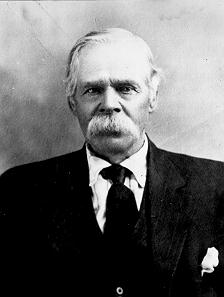
Samuel Thompson Stewart

Father: Samuel Thompson Stewart (1844-1932)
Sarah Marble Stewart, wife of Andrew Stewart (1883 - brother of Angeline Stewart) tells us, in a 3 page biographical sketch, that Angie's father Samuel Stewart was a man of good cheer that often told his family stories about pioneer life. His mother died when he was 12 and at age 13 he was apprenticed as a plumber.

Angie's sister-in-law Sarah wrote, "On March 14th, 1862 [at age 18, Samuel Stewart] left his native land [Scotland] and started for America. ... He was five weeks and three days on the ocean. [His immigration record states 'Arrived NewYork City 12 June 1862. Took Railroad to Florence, Nebraska Territory.]
-
"At Florence, Nebraska he was delayed for six weeks waiting for teams to start to Utah. He was successful in getting a job driving six yoke of oxen on a heavily loaded wagon of merchandise. [In August 1862] He traveled with [Ansel P.] Harmon company which had fifty-two wagons, four to six yoke of oxen to the wagon also eighteen people to each wagon, so that they had to walk much of the way. Grandfather had a number of girls riding with him…. His quick thought and courage and clean good humor made him a general favorite." 

They arrived in Salt Lake 5 October 1862.
-

Mother: Mary Ann Clark (1847-1916)
Daughter of Joseph Owen (Onion) Clark and Ann Clark
-
From a brief history of Mary Ann we learn, "As a seamstress, Mary Ann's mother [Ann] was gone much of the time, so Mary Ann took care of the house and older children. Her mother demanded strict obedience of her children and administered very severe punishment. … Her father was the opposite -- patient, kind, and pleasant.

Mary Ann was short, only five feet tall, and had brown, curly ringlets. She was much like her father in temperament."

Sarah Marble Stewart continues,"[Samuel] arrived in Salt Lake City ... 6 months after he left Scotland with only six bits (75 cents) in his pocket, no home, now where to go. ...
-
"He soon found work in Sugar House Ward and so steadily did he work and so carefully did he save that with some advance wages he was able to send to Scotland that first year $500 in gold to bring his loved ones to Utah. 
-
"During the time he had been in Utah he had met Mary Ann Clark ... So not long after that [16 April 1864] they went up to the Endowment House. While waiting their turn, Heber C Kimball asked Grandfather if he was taking his wife through. Grandfahter said, 'No, my gal.' They were married by Wilford Woodruff.
-
"They lived in Salt Lake City, Utah until about 1867 when they moved to Clarkston, Utah. Here they lived doing their part in building a new community.
-
"Grandfather received a call on a mission to assist in building the Logan Temple which he fulfilled. Always inventing things to make things handy, he made a sawmill and a gristmill run by a water wheel in the Creek. He also made caskets, covering them with black velvet. One day he made a casket, got into it and sent for Grandmother to come and see if it would do.
-
"He was with John and Thomas Godfrey when Martin Harris gave his last testimony of the truthfulness of the Book of Mormon..."
-
Clara Stewart Richman, sister to Angeline, wrote that their father "Samuel Stewart was elected constable of the community in August 1868." She also tells us "Samuel was about 5' 10" tall, with black hair, dark eyes and a very fair complexion."

Aunt Sadie (as Dad Ames called Sarah Maud Buttars Hansen - Angeline's daughter) recorded, on a family group sheet prepared in 1979, that Angeline was baptized when 8 years old.

Baptized: 1 July 1882 

Her son Ruben wrote in his history of Angeline: "The family attended church in the rock church house on the east side of the square, just a block from home. She was baptized 1 July 1882 in a stream north of Clarkston, known as Big Creek."


At age 9 we see Angeline on the 1880 US Census in Clarkston, Utah with her parents and siblings. Although the older children are marked as having attended school Angeline is not. From her son Ruben we learn "She went to school in a little frame school house, just across the street from her home. She only has a sixth grade education. Later her father bought a farm two miles north of Clarkston, where she lived until she got married. 

"Mother and Father grew up in the same town. He was three years older than she and began going out with mother's sister Julia Ann. As families do, they teased Julia about Charles Buttars and she said she didn't think she liked him well enough to marry him. Then mother said, 'Julia, if you don't want him, let me have him.' Soon after that he called and took mother buggy riding. At that time mother was only sixteen."


Spouse: Charles William Buttars
Married: 18 May 1892 Logan, Cache, Utah, USA

Sarah Marble Stewart tells a significant family event of that approximate time,"One day the lightening struck the house. Grandfather [Samuel Stewart - Angeline's father]was knocked unconscious. This was on Friday afternoon and he did not get much better until he had been prayed for in Sacrament meeting Sunday afternoon. Alice Dahle was in the room standing near a looking glass, she lost one eye and about 500 pieces of glass were taken from her body from her waist up. It wasn't long after this in the spring of 1893 that he moved to Wilford, Idaho. ..."

Other sources say "Samuel and Mary Ann Clark lived in Clarkston, Cache county, Utah until 1894, three years after their youngest child, Clara Elizabeth Stewart, was born. Then they moved to Wilford, Idaho.

Mary Ann had not wanted to move, but after their Clarkston home was struck by lightning, breaking all the windows, and injuring several family members, they decided to go to Teton, Idaho. Two of their married children were already there; most of the other children went with them, but their daughter, Angeline Vilate Stewart remained behind to marry Charles William Buttars." 
-
Pictures show us this family were close enough to gather for a family picture as adults. 
-
Clothing in this photo appears to be a conservative 'flapper' style circa 1920

The five daughters also pose together for several 'sisters' pictures.


Died: 30 May 1931 Clarkston, Cache, Utah, USA
Buried: 2 June 1931 Clarkston, Cache, Utah, USA

Wednesday, May 30, 2012

ANGELINE VILATE STEWART death

Angeline 'Angie' Vilate Buttars nee Stewart

Papa's great grandfather died suddenly October 5th, 1908 at only 37 years old, leaving 8 children age 14 and under for his 34 year old widow, Angie, to raise. Their first of 9 children, a boy, died at birth. Their youngest child, was a baby only 4 months old. She struggled with health issues such as severe asthma and later on, diabetes.
-
Her son Ruben David Buttars, in an 11 page history, of his mother wrote, "At the time of his funeral mother was so ill with asthma that she couldn't attend the services. ...
-
"This left mother with a very big load to carry; [a large family, and] a 320-acre farm with a $6,000 debt against it. There was also about eighty head of horses still on the range. The fall crops were still not yet planted. 
-
" Some of my Dad's brothers got together to see what should be done with the farm and to help what they could. They talked to mother and told her they thought it best to sell the farm; ... Ben, my oldest brother, was only ten years old and too young to take over the responsibility of the farm."
-
Lana Archibald, granddaughter of Angie's son Ben, kindly provides descendants with access to many records and photographs on a free website she maintains. She has compiled several records and summarizes the situation succinctly.  "Angie decided to keep the farm and sell the horses to pay the debt. Somehow they got by. Ben helped round up the horses and found all but eighteen. All were sold except a gentle team of trotters for the buggy, and a mare to raise colts. By the time Ben was sixteen, he ran the farm and provided for the family by himself.
-
Ben Buttars, as an adult, harvesting with 12 head of horses. 

Ruben continues, "Mother was still suffering very much from asthma. One night, when I was in the first grade, [approximately 1912 or 13] I came home from school an hour earlier than the others. It seemed like no one was around so I decided I'd see if I could play the organ. Mother had recently bought a used organ for my sisters to practice on. I just got started good, when the bedroom door opened and Aunt Liz Loosle came out and scolded me good for making so much noise. She said, 'Don't you know your mother is dying in the other room?'
-
"That hit me very hard and I walked outside, thinking what a terrible thing it would be if mother should die. With my father already dead I wondered what would happen to us kids. I sat down beside the barn and cried and cried.

"Mother had these attacks very frequently and she would send for the Bishop and his councilors to come and administer to her. She never was cured, but always got relief. One evening when I got home from school mother said to me, 'Get on your horse and go get the Bishop, I want him to administer to me again.' -
"They came and the Bishop said, 'Angie this doesn't seem to do much good, why don't you go to the temple and have them pray for you?'
-
"Mother said, 'I can't go to the temple, I'm not worthy of a recommend. I have been drinking coffee once in a while.'
-
"He said, 'Promise me that you will leave coffee alone for thirty days and then I will give you a recommend.'
-
' Mother told us that that night she prayed to our Father in Heaven and promised him that she would never drink coffee again if he would help her to be cured from this illness. 
-
"When thirty days was up, she went to the Bishop and told him what she had done. He gave her a recommend and told her that if she had faith enough she would be healed. 
-
"She went to the temple and had them pray for her. And as a living witness, I know that she never had asthma again. From that time on, due to Ben's hard work and mother's good management we began to get out of debt. My oldest sister Mae (Mary Vilate) got married and mother loaned her $1200 to make a down payment on their home. 
-
"About this time, [after 1918] brought on by the troubles and worries, mother developed sugar diabetes. ...She got so bad one time about 1926 that she was in the hospital in Salt Lake for three months. They gave her insulin and insisted she drink black coffee. 

[I, blog author, do not agree and research indicates that caffeine raises blood glucose levels by about the same amount as oral medications decrease them, and makes them difficult to control. This seems to be an area of ongoing research with many conflicting opinions - none well proven.]
-
"From that time on she had to take insulin and be on a very strict diet. Sadie (Sarah) my sister went to Salt Lake and learned how to give mother her insulin and weigh out her diet. Mother always felt hungry for sweets, and craved them so bad that sometimes when she thought nobody was looking, she would help herself, even tho she knew she shouldn't. 
-
"18 August 1929 my sister Mae (Mary) died from complications following an operation, leaving five small children. [Wallace Will Ames, age 8 - Papa's father, is one of these children]. This upset mother very much."
-
"Then came the depression and financial difficulties, family troubles, and agitation over probating the estate caused mother's health to gradually become worse. 
-
"One by one the children got married ... Earl [her youngest] got married in 1928 and mother rented him the farm, and she and Sadie moved to Logan where Sadie took very good care of her." Sadie was  the only child still unmarried but she soon met her husband, Colline Hansen, and was married in 1932.

Logan Utah 1930 US census shows Angeline with her daughter Sadie

[Angeline] was taken to the hospital, went into a coma and died, ... the day her youngest son was 23 years old. She was buried in the Clarkston cemetery ... by the side of her beloved husband and infant son, survived by three sons, five daughters, her father, four sisters, and seven brothers. 
-
Death certificate for Angeline Vilate Stewart Buttars

Lana Archibald records, "She had been given a blessing early in her life that she would live until the time her family was grown. When her youngest child, Earl, was 23 years old, she died on May 30, 1931, at the age of 57 years. All her children were married in the temple." 

Grave on left of the monument is Angeline's. 

Died: 30 May 1931 Logan, Cache, Utah
Buried: 2 June 1931 Clarkston, Cache, Utah


More about this family here.