BOTTLED

  • “Sometimes the questions are complicated and the answers are simple. Dr. Suess

Monday, April 16, 2012

WILLIAM DAVID CAMPBELL history


Born: 17 April 1901
Bentley, Alberta Canada

My mother's father was born on his parent's first wedding anniversary.

He was also born in a hospital. That was so unusual for his time that it was remembered and noted by every person that knew of his birth. That is perhaps the only thing agreed upon. Although his family resided in the area of a small town that became Rimbey, Alberta [called 'Kansas Ridge' in what was known as the 'Northwest Territories' of Canada] I have been told that the nearest hosptial was in Bentley, Alberta, Canada.

Family records and traditions and some more formal records such as marriage and death records state his birth occurred in Rimbey and also Lacombe. His birth certificate lists Bentley, Alberta, Canada. The informant was W. Burris at Lacombe on 17 June 1901 and the return was made the 18 June 1901 at Innisfail, Alberta.

I note that a correction in Grandma Campbell's handwriting on a 'personal record' changes the place of birth from Rimbey to Bentley but on a personal record that I suspect is printed by Grandpa it says 'recorded as Bentley'. Other official records, that he filled out, say Rimbey.

Map from Google maps April 2012
Father:  William Warren Campbell (3 Aug 1871)
Son of  David William Campbell and
             Kizzie Ann Averett

Mother: Phoebe Alice Tolman (21 Aug 1875)
Daughter of William August Tolman and
                     Mirantha Althera Bates

Grandpa William David 'Bill' Campbell [about 1974] wrote: 

"My father was born in Panquitch Garfield, Utah, USA ... When he was 13 years old he started working with his father on the Union Pacific Railroad. He also herded sheep along the Grand Canyon. In 1897 he got a job with a sheepman, William Tolman, whose daughter became my mother, ... My father was with him during the sheep and cattleman war in Idaho. It was during this time that he met my mother...

" My father started to court my mother, Phebe Alice Tolman, and they were married in the spring, April 17, 1900. They decided to take the sheep camp wagon and started for Cardston, Alberta, Canada. In 1900 they were in Cardston for a short time, then decided to go further north to Lacombe, Alberta. Here they homesteaded at Bentley in the same area as the Tolmans that were already there. In September they built a sod house and broke some land. I, William David, was born in the spring of 1901 one year later and my brother 
Edward was born in 1902."

On page 47 in a book titled 'Pas-ka-poo: An Early History of Rimbey and the Upper Blindman Valley' we find Great Grandpa Tolman homesteading with 3 of his sons, William Cyrus, Ormus Albert, and Erin Layfette.


Grandpa continues, "At that time it was so wet for two years. the grain that was planted didn't ripen so they decided to move back to Cardston.

"In 1905 they started back in the same covered wagon. On the way we camped by a bridge. I wanted to play on the bridge. Mother said if you go on that bridge it will go up with you, that stopped me.

"On the way it seemed like there were a thousand Indians. Sometimes my father was away from the camp to get the horses. That was when the Indians would come into camp to bother mother. She had my brother Edward in a baby carriage. The squaws wanted to take him out of the carriage. Mother always carried a six shooter. She got it out from under the pillow and started shooting in the air.

"We arrived in Cardston in the fall of 1906 and my father started to work as operator of the Card Estate in Cardston until 1907. Then the Tolmans moved back to Cardston and built a new home there in 1907 and also a home on Belly River 3 miles south of where Hillspring is now. My father left the Cardston job and went to work for Grandfather Tolman freighting lumber from the Henery Hansen Saw Mill at Waterton Lakes. In 1909 my father bought 1/4 section of land on the East shore of Strawberry Lake south of Hillspring."

Baptized: 3 July 1910 by Robert Alroyd
Confirmed: William Warren Campbell

On Grandpa's personal record it is recorded he was confirmed in Hillspring Ward, Alberta Stake and that his father was an Elder [of the Church of Jesus Christ of Latter Day Saints]. The dates and other particulars for his own Priesthood ordinations and Patriarchal Blessing are also recorded.

Deacon: 4 May 1913
              Hillspring Ward, Alberta Stake
              by Thomas Davies - Elder

Patriarchal Blessing:18 June 1913
              Hillspring Ward, Alberta Stake 
              by Patriarch Henry L Hinman

Teacher: 15 or 17April 1917 
              Hillspring Ward, Alberta Stake
              by Thomas Davies - Elder

Priest: 7 or 17 January 1923 
             Hillspring Ward, Alberta Stake
             by W. H. Caldwell

Elder: 20 December 1926 
           Hillspring Ward, Alberta Stake
           by William Warren Campbell - Elder

High Priest:27 August 1978
            Hillspring Ward, Cardston Alberta Stake
            by Raymond Keith Olsen - High Priest

Endowed: 22 December 1926 6:30 pm session
           Cardston Alberta Temple

I again pick up the thread of Grandfather's autobiography, "In 1918 [my father] bought the Walter Caldwell place; 1/2 section North side of the lake. That winter I went to Claresholm Agricutlure College, with Magrath Merrill, Lorenzo Davies, Grant Caldwell.


"In 1919 [Bill is about 18 years of age] the great drought began. We planted 200 acres of wheat and got 300 bu of wheat off the Stawberry Lake bed. That fall Dad bought a new double bedded wagon box. In June we took a load of wheat to Cardston.
"When we forded the river on the way home there had been a heavy rain storm. The river had risen up and was still rising fast and the rain was still pouring down. It was dark and we could not see. We went into the river the wagon pointed straight down and the horses swimming. I could see dad. He had cut the horses loose and I was still in the box which had floated off the wheels and I was floating down river. Father had followed the horses acrossed and came looking for me. I had landed on the right side and was trying to hold onto the box which was on a sand bar. We left it there and went home going back for it the next day.

"There is a funny story attached to this wagon box also. At this time there was several coal mines in the district. As a boy I had been in these mines several times and had saw the miners set the cap and fuse for the dinamite . One day father and mother were away from home so I took some dynamite caps and started using them as firecrackers.

"One two fuses [? original wording retained] I gave it a throw and the wind blew it into the wagon box. It blew a hole about a inch long. I was really scared. I was afraid to tell what I had done. One day Father saw it. He looked at it and came over to the house and said, 'did you see that hole in the wagon box?' and I said, 'what hole?' He said, 'I just can't figure out what done it.' I did not say anything. Every day he would look at the box and wonder how it got there. I never did tell him what I had done.

"There is another story about this dinamite . It was not funny at the time. I had a stick or two hid out under the granary. I heard one day that when it got old it got hard and dangerous. So I thought I had better get rid of it.

"So I was alone this day. Father in hauling firewood from the river had hauled a large grant log or wood almost 3 feet thick. It was so tough he couldn't cut it up with axe or saw. One day I heard him say, 'If I had a stick of dinamite I'd blow it up.' So this day I got a stick of it, drilled a hole in the log centre, tamped it in, put a plug in it, set the fuse, and ran behind the house. The log disappeared. There was nothing left of it. Some was almost down at the barn.

"Then I thought, 'how am I going to explain this?' The log was right by the gate.

"When they returned home I was really scared this time. At the gate he stood looking all around. He said, 'did somebody move that log?' He never did say anything more about it. He must of had some idea."
Grandpa says he often wondered if he was the only young one to play around with dynamite. Later when working with some other men they got to talking and grandpa repeats several dynamite stories they told him from when they did similar things.

"In 1919 and 1920 there was no feed in the country. Father and Marion Brooks each took a team of horses and went north to Cold Lake. All the rest of our animals died. We had 18 head of horses die. Cattle and pigs also. Marion Brooks had one cow. His son Willard Brooks and I butchered her.

"We lost this farm and got another 1/2 section west of Hillspring on the Waterton River and lived there for 6 years. In 1917 my mother, Phebe Alice Tolman Campbell, took a nursing course under Dr. Ellis R Shipley, a lady doctor. Mother was a wonderful person and served in her nursing night and day bringing a great number of babies into the world - while raising a family of 9 children, 2 girls and 7 boys ... Edward [Ted] Lawerence... , Alberta Pearl... , Parley Merlin... , Warren Earl... , Lowell Tolman... , George Albert... , Ray Everett... , and my youngest sister Elsie May..."

-
William David Campbell and Elna Bohne eating chocolate
Aunt LuRay says this is just before they were married. 

Spouse: Elna Bohne
Married: 22 December 1926
               Cardston, Alberta, Canada

Sealed: 22 December 1926 
             Cardston, Alberta, Canada
             by Edward J Wood

Died: 13 July 1990 
           Cardston, Alberta, Canada

Buried: 17 July 1990 
             Hill Spring, Alberta, Canada

Saturday, April 14, 2012

DEAR MARTY

April is a busy month.

It starts off with General Conference, often has Easter and/or 'Spring Break' and then birthdays start. Yours leads a pack of about a quazillion April birthdays (and other significant dates).

Happy Birthday.

You lead the pack in many other ways too. Sometimes you don't have much to say but we appreciate much wisdom in what you do say ... especially the humourous world view you expose periodically.

Thank you for being a husband and a father - a dad that cares about and interacts with his children and spouse. And thanks for caring about and doing for others.  Like building steps that make walking up them easier and noticing such minute details - that is only one small example.

We hope this is a day when you notice how important your arrival in the world was. We love you and are glad you are part of our family - do you know that?

Don't answer that!

Sunday, April 8, 2012

HALLELUJAH


I cherish the words of Isaiah

There (in the Old Testament of the Bible) this great prophet teaches about Jesus Christ: his birth (Isa 9: 6), his life, his death, and why we need to know about him (Isa 53).

This Jesus Christ as taught by Isaiah, whose life is recorded in the many books of the New Testament, gives me hope, and he gives me help. HE sets an example to follow and promises I can become like him. 

Galatians 4:7 “… thou art no more a servant, but a [child]; and if a [child], then an heir of God through Christ.”

Isaiah 45: 22 Look unto me, and be ye saved, all the ends of the earth: for I am God, and there is none else.

I have no words to express the greatness of Jesus Christ. Some poetic and masterful music, such as Handel’s Messiah, helps to praise and extol this same Jesus Christ. With hymns I honor Him. I worship Him, especially at Easter

With Isaiah, as in Chapter 12,  I would sing and shout aloud:

1 And in that day thou shalt say, O Lord, I will praise thee: though thou wast angry with me, thine anger is turned away, and thou comfortedst me.

2 Behold, God is my salvation; I will trust, and not be afraid: for the Lord JEHOVAH is my strength and my song; he also is become my salvation.

3 Therefore with joy shall ye draw water out of the wells of salvation.

4 And in that day shall ye say, Praise the Lord, call upon his name, declare his doings among the people, make mention that his name is exalted.

5 Sing unto the Lord; for he hath done excellent things: this is known in all the earth.

6 Cry out and shout, thou inhabitant of Zion: for great is the Holy One of Israel in the midst of thee.
-
And then there are the words and songs I can not sing. My tongue is bound, my shouts of praise silenced as "I  Stand All Amazed" with awe in recognition of the magnitude of this divine omnipotent being, Jesus Christ. Emotion chokes my throat and tears seep from my eyes and fall in reverence of His love and willingness to live and to die that I can have that hope and help that he invites me to enjoy. 
-
I can not speak for I KNOW - He lives!
-
With the Psalmist my heart exults --


Saturday, April 7, 2012

CLARENCE CHARLES SHELTON history

Clarence Charles Shelton, Papa's grandfather
Born: 
7 April 1888 Henry, Marshall, Illinois

In 1978 Patricia Shelton Erdman [a first cousin to Papa] gathered photos, memories and stories from the children of her grandfather, Clarence Shelton, (and many other relatives) in preparation for the first ever reunion of his family.

In the short history prepared at that time she states, " ... his mother lived in Henry, Illinois at the time of his birth. He was recorded to be the third child. His parents were both 35 at the time of his birth and his father was born in [Ohio] and his mother was born in Pennsylvania. Older brother, Martin [Edward Kear], was born 22 September 1884 in Mossville, Peoria County, Illinois. His sister, Mary Edna [Kear] was born [about 1886]."

Father: Reuben Thomas Shelton (1853-1892)
     Son of Joseph Shelton and Elizabeth Cochran

Mother: Mary Agnes Kerr (1853-1889)
    Daughter of George Kerr and Lowetta Williams

"Anna Rathbun, a first cousin, writes of Clarence Shelton: Aunt Mary died shortly after Clarence was born so Grandma Lowetta Kear [spoken Care] took him for a while but he was not getting along very well. She took him to the doctor and he said that what Clarence needed was a mother's milk or he would not live much longer. Since mother (Stella Kear Newell) was nursing my sister Pearl, who was about 8 months old, she brought him home to live with the family and she nursed him just the same as if he was her own until he was old enough to eat like any baby does."

Clarence's mother died about January 1889. He would have been about 8 or 9 months old. His cousin Pearl was born 28 August 1888. She is approximately 5 months younger than he is. Pearl would have been 8 months old in April 1889. Clarence would be 1 year old at that time.

"She also gave him fresh cow's milk. She kept him until he was big enough to get around by himself. Then he went back to Grandma's, as Mama was expecting again. She said he was almost 2 years old. Clarence was just like the rest of us and I remember he was just like my older brother Oscar. Clarence was always welcome and came to our house and stayed for days sometimes, as it was like home to him. 

" As far as I know Clarence went to school in Sparland [Illinois], as that is the first school I went to. He was Pearl's age and they were older than I was, so were not in the same room I was. There were 4 rooms in our school. The first 4 grades were in room 1, the next 4 grades in room 2, and the first 2 high school grades in room 3 and the last 2 high school grades in room 4. Rooms 3 and 4 were up stairs and I don't remember being in room 2 but once. The teacher sent me in to ask Pearl something but I don't remember what it was.

Grandmother Lowetta Kear and her son Edward Kerr
with Grandson Edward Shelton end this 1900 US Illinois census page 
The 1900 census shows Clarence as a 12 year old living with his Grandmother in Sparland, Illinois. He attended school 9 months of the previous year, can read and write, and he speaks English.

Clarence Shelton's name is on the top line of this Illinois US
1900 census page (after his grandmother, uncle and brother
 at the bottom of the previous page)

Anna continues, " My Uncle George [Kear] gave Clarence a bad time, so he came to our house often, until Uncle George moved away. Clarence stayed with Grandma more until then. 

He and his brother Ed didn't get along either. Ed always bossed Clarence, as he was about 3 years older, and always put the blame on Clarence if he could.

"Uncle Ed Kear never had children so was always taking children into his home as he and his wife Addie loved children. Ed and Clarence were also know to have lived with them too. The family lived in and around Sparland, Illinois.

"About 1904, when Clarence was 16 or 17 years old, he ran away from home and lied about his age to get into the Navy. He said he was 18 years old to get away from Ed and Uncle George. It seems Ed had done something and told Uncle George that Clarence did it, so Uncle George gave Clarence a beating. That was when he ran away from home and joined the Navy.

"We didn't see him again until he got out of the Navy and he came to our house. Mama (Stella) talked him into going back and staying with his Grandmother, as her health was failing her.

" He got a job working in the timber, cutting cord wood, as they used a lot of cord wood for props in the coal mines then. He stayed until Ed came home too. Ed wouldn't stay very long as he wanted to go out and do as he pleased and he couldn't do that around Grandma. Grandma was always boss wherever she was and we did not dare to question her about anything, as she was old, and we were not to talk back to her or be contrary when Grandma was around. Clarence stayed at our house afer that, as it was close to where we lived and Mama told him he couldn't batch it and stay in a tent in the winter. He also helped us, as he was like one of the family, and my father was crippled."

Spouse: Sarah Isabelle McNicholl
    Married 4 June 1913 Entiat, Chelan, Washington

Martha Doris Dugan married Clarence Shelton in Las Vegas, Nevada 20 June 1945. In the history mentioned above she says, "His health was never good. X-rays showed over half his lungs were scar tissue from working in the mines in his younger years." 


George Kear, his grandfather that took him in as an orphan child worked in the coal mines. From the above statement of Martha Shelton Childs we may conjecture that Clarence worked in those coal mines also. We know that as an adult he worked mostly in the timber and sawmill/lumber business.

Died: 27 December 1953 Barstow, San Bernardino,California,USA
Buried29 December 1953 Barstow, San Bernardino,California,USA

Sunday, April 1, 2012

FREELY FEASTING


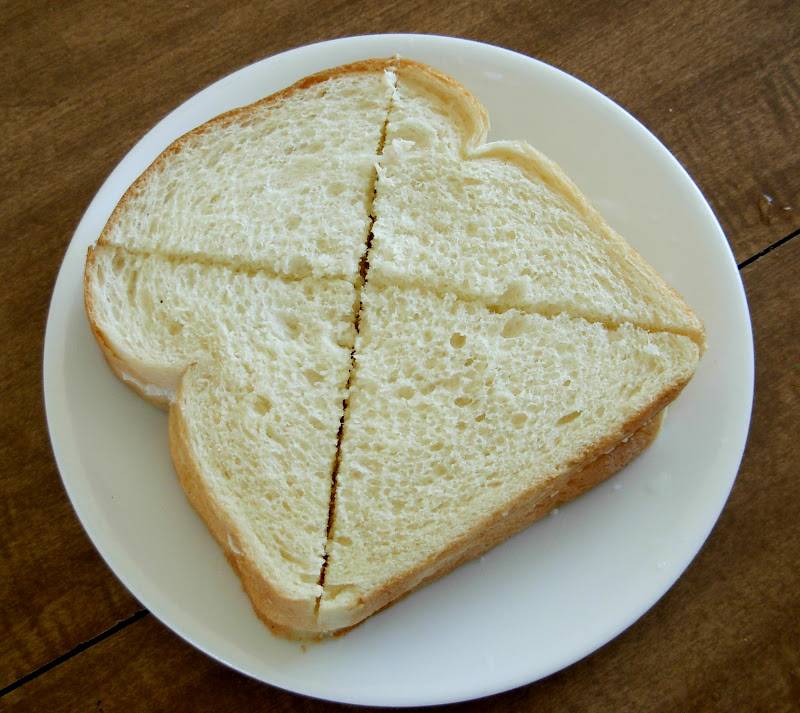
Want a tuna fish sandwich?
It doesn't look like much.

When you're hungry, a nice thick sandwich is terrific.
I like mine with finely chopped dill and onions.


Put on a plate and sliced it seems a bit nicer.
But it is hardly a feast.


What about some pickles - mmm.
Papa can even eat tuna that way.


I think Papa might eat anything served on his favorite glass lunch plate. Especially if he can have 'Green Goddess' dressing with it. [Why is that stuff so hard to find anyway?]

-
Especially if I throw in some lettuce,
add a few vegetables and some fruit, and pour some juice.
And finish it off with a handful of chips.


Now that's a feast!

We have been feasting all day.
We feasted yesterday and today.
We watched all the sessions of general conference.
Surely it is a feast! We do it every 6 months.

How do you like your tuna?

How many ways can each food you like be prepared, presented, baked, chopped, sauced, or shredded? Do you like them fresh or cooked? do you want to chew it or drink it? I could get hungry just discussing it.

How many kinds of sandwiches do you like?
What is meat for you?
What kinds of toppings do you like?
What condiments do you add?
What about fruits? or vegetables?

And cheese - think of all the kinds of cheese.
How many things can you do to cheese?

What makes a feast?
How much of something does one need for a feast?


We decide part of having a feast is having leftovers.
Having some to enjoy again later.

Feasts seem to change us and our home.
Often the piquant or luscious odors of good things linger.

We have learned to partake prudently. We bask in the abundance and pick and choose favorite quotes and stories like tasting samples of too many good things at an all you can eat smorgasbord. We savor the fundamentals and flavors of the few hours the sessions are presented.

We know General Conference can be savored any time.
We help ourselves to a talk or 2 every Sunday afternoon.
Occasionally we have one for family home evening.
Sometimes we feast as a special occasion by topic.

We decide it is hard to feast alone.
Inviting someone to share it makes a feast more festive.

Who do I know that is hungry?
How about you? Want some fish?

Friday, March 30, 2012

ANNUAL LDS GENERAL CONFERENCE 2012

You are invited ...

            Come. See. Hear prophets ...


Redeemer of ALL


Sunday April 1, 2012

9 - 11 a.m. PDT [10-12 a.m. MDT]

1 - 3 a.m PDT [2-4 p.m. MDT]


Thursday, March 29, 2012

JAMES ANDREW McNICHOLL DEATH


Papa's great grandfather, his mother's grandfather, was a frontier settler and pioneer of the western United States.


Died: 29 March 1910
GrangevilleIdaho, Idaho
Buried: 6 April 1910
Grangeville, Idaho, Idaho


He left behind a young widow, Frances Alois McNicholl nee Huckins, after only 20 years of marriage and 4 living daughters, the youngest a toddler. Two daughters preceded him in death. His widow moved from Idaho to be with family in Washington state. Her father died 8 months prior to her husband and on the 1910 census taken in June she is head of a household that includes her 4 daughters, her mother, 3 brothers and an 8 year old nephew.

This move vitally affected the family. On the 1900 census Fannie's father is the mine foreman for the Tom Hal Mining Company founded in 1899. Their household includes 20 miners as boarders. One of the miners is Robert Dougherty who married Fannie McNicholl's sister Daisy in 1897. The 3 older daughter's of James and Fannie soon marry in that area.

Photo and Death certificate in possession of Patricia Shelton Erdman.

Tuesday, March 27, 2012

DEAR ZAYMES

Happy Birthday!

I am amazed that you are old enough to go to scouts. It was so fun for us to talk with you on the phone about your very first scout camp.  We loved seeing the pictures of your pack too - it was bigger than you are.

Do you know what a wood tick is?

Please be sure to have you mom or dad teach you about ticks.  I took this quiz and only got 8 out of 15 of the answers right. Papapa is right to be very careful to never get a tick. When you get home from camps and hikes ALWAYS check (even in your hair) to make sure you do not have any ticks. And clean all your stuff carefully too so none are hiding out in there.

We notice that your brothers are getting almost bigger than you are. That might make it very hard to remember to be kind to them.  Do it anyway. You are a very clever boy.  You can think of HOW to do that - even when it is not easy.

ALWAYS be kind to you mom and your sister as well as your brothers and your dad.  You know that being kind is one of the most important things to help you be happy in life. If you ever feel unhappy be kind to someone and you will feel a lot better.

AND if you have been unkind to someone just stop it. Say, "I'm sorry for ______", and then do something nice for them. They will be very surprised. You can even say 'I am sorry' in a letter but it is better if you look them in the eye and say it to their face.

You can only be truly happy when you are kind.

We love you lots and lots and sure miss you.  Love Papapa and Grandma.

Monday, March 26, 2012

ELNA BOHNE history

Born: 26 March 1909 Aetna, Alberta, Canada

Elna Bohne Birth Certificate

My maternal grandmother, Elna Bohne, was the 8th and 4th surviving child of her parents. Records tell us that an older brother, "Samuel Hatcher Cobb, was given by his father William Cobbs to his cousin Laura Elizabeth Carpenter, due to his own mother's death [Ada Cobb].  Samuel was sealed to Laura and Henry at the time of their marriage in the Manti, Utah temple".

Death was common in the early 20th century for women and their babies during and shortly after birth. Five of Elna's ten siblings died at birth or within a few weeks and months.
They are buried in the Aetna, Alberta cemetery.

Henry Bohne Family  - Elna on mother's knee
Anitbiotics and many other modern medicines and marvels were just beginning to be thought out, invented and refined. Grandma Campbell was born into a world where such things as cars, airplanes, telephones, radios and televisions were being developed. In 1939 her own toddler, Annetta Lou, would die because antibiotics were not yet a common solution to simple sickness and infection.

I once asked Grandma what they did when someone had a bad infection. She said they used poultices (or plasters). One of the most effective was made from fresh, whole milk that was scalded (NOT boiled) and mixed with white bread to a thick paste-y consistency. She said just crumble the bread and pour a small amount of the hot milk into it, then let it cool enough to not burn but while still very warm apply to the affected area.

I saw it work for an infected hangnail that antibiotics were not solving. They did know and have many good remedies. Other poultices/plasters were made of raw onions, or mustard and flour.

Campbell home built by William Warren Campbell (original log with additions) 

In1989 my Grandma Campbell allowed me to copy some documents that she kept in a trunk. I called to ask if she could share information she might have. I think my mother and I drove about an hour from her home in Kimball, Alberta to her mother's in Hill Spring, Alberta.

When we arrived she had a large trunk in the kitchen. She said I could take anything in the trunk to copy as long as I brought it back. I worried about getting things back to the places she had them organized at. She laughed, right outloud, and told me she just put things she thought might be worth keeping in the trunk and that when they got looked at over the years they got mixed up many times.

We spent the afternoon visiting, hearing stories about her childhood and family and I went through the contents of the trunk. It didn't seem practical to copy everything. I couldn't lift it and I certainly didn't have enough cash to pay the bill at the copy shop. My mother had handwritten copies of most of the genealogical information and there were not many photographs in the trunk.
  -
handwriting of Elna Bohne Campbell

With my limited budget in mind I sorted and sifted out a small stack of papers, letters, and mementos that gave information I thought might be useful someday. I put everything into one package to keep it all together so that none could possibly be misplaced.

I carefully photocopied the information the next morning, paid the astronomical (for me) bill, and returned it promptly. My greatest worry was if a disaster or accident happened while I was responsible for such precious cargo. Whew - I was so relieved when it was all safely back in her trunk at her house. My copies are appropriately filed for the most part.

From her personal record, written in her hand, I learn:
Blood type - AB
Born at home - weighed 7 pounds.
First home - Aetna, Alberta, Canada.
-
Henry Magnus Bohne
Father: Henry Magnus Bohne (1868-1957)
               born Mr Pleasant, Utah.
(son of: Henry Morten Bohne and Juliett Day).
-
Laura Elizabeth Carpenter
Mother: Laura Elizabeth Carpenter (1869-1928)
               born in Richmond, Virginia 
daughter of: John Samuel Carpenter and
                       Ann Marie Cobb.
-
Blessed by her father 6 June 1909, 
              Aetna Ward, Alberta Stake 
[of The Church of Jesus Christ of Latter Day Saints]. 
-
Henry  and Laura Bohne Family - Elna standing in front of her mother
-
Baptized [a member of The Church of Jesus Christ of Latter Day Saints] 17 July 1917 in the river at Orton, [Alberta, Canada] by George Silito.  Other records say the date was 7 July 1917.

I asked my mother if she knew who George Silito [likely Sillito] is and why he might have been the person that baptized Grandma. She said that many years ago, when she was baptized, that the Ward would wait until there was a load of kids that needed to be baptized and then they would all travel together to the designated place and the Priesthood holder that was available would baptize them all. She said there were many Sillitos in the church in that area. She surmises that the children in the Ward were taken to the river in Orton to be baptized when the weather was warmer than March.
-
ASIDE: When mother was baptized the kids were taken to be baptized in Cardston at the temple because someone had a car and they could go and come back in such a short time. Bubble Gum was a new and wonderful thing and someone (she doesn't remember whose car or who had the gum) gave each of the children a small piece of Bubble Gum. They thought they had the world, she says, and were so thrilled.  She gets car sick easily (but at that time did not yet know that). As she chewed it she became nauseous.  She knew she was going to throw up so she rolled the window down as far as it would go but that is only part way on those old cars. She began to throw up and the driver kept driving. She said she threw up over and over again.  In the temple at that time they bathed  all children before they were allowed to be baptized. She remembers the bathtub there. She was very grateful to get a bath. -

Elementary School was attended in Orten, Alberta and Aetna, Alberta. Her father farmed there for approximately 10 years before returning to Aetna.

In a book entitled 'Range 25 Country, History of a Valley, A River, and a People' about Aetna and Kimball, Alberta and area we read that Elna's paternal grandparent's, Henry Morten and Juliette Bohne, and their family arrived October 8,1898 on the banks of the St. Mary's River after a six week journey in 4 covered sheep wagons from Birch Creek, Utah. They homesteaded on land west of Aetna, later moving to the townsite of Aetna and building a large one room house on the north bank of Snake Creek. Henry kept promising to add more rooms later.  One time when Juliette went to Utah for a visit she refused to come home until they were complete. A carpenter was hired and several rooms and a spacious pantry were finished. Then Juliette came home.

Garth and Jean Forsyth moved into this house in April 1953 and rented the farm with a one year lease. There was no power or indoor bathroom. It had a wood stove in the kitchen. It was  heated with an oil stove but was almost impossible to heat because of the high ceilings. The water came from a well outside just under the South window. They had never been on such a big place. Dad says the 55 acres ran west of the house about 1/2 mile up to the gravel pit. They got a bunch of sheep that spring and fattened them and sold most of them that fall. Tim was born there in Oct. They had planned to stay many years but the deal that Hugh and Zelma were in fell through and they had to move when the year lease was up.


Page 370 of the above book states, "[Henry and Laura Bohne] lived in the old Bohne place for many years, milking cows [a significant part of their livelihood], raising chickens, pigs and running their farm. While milking a cow one day, the cow flipped her tail across Henry's face resulting in the loss of one of his eyes.[It was his left eye.] The Bohne family kept the Aetna stray pound for many years."

On page 371 we read further about Elna's grandparent's. "At their 50th Wedding Anniversary [about 1916] the meeting house was crowded with friends and relatives. Speakers ... paid tribute and Owen Bohne, then a small boy, stood on a chair and sang 'Put On Your Old Grey Bonnet'. All of Juliette's sons danced with her at the evening ball and upon request she tap danced for the crowd. Juliette was a large tall woman possessing remarkable carriage and poise. " Elna would have been approximately 7 years of age.

The book continues, "Henry Bohne [Sr.] had well-groomed horses with polished harnesses. Each Christmas morning all the grandchildren were taken for a sleigh ride, sleigh bells jingling with Henry cracking his whip."

Surely such events were part of Elna's life.

Elna, herself, tells in a short one page typed history, "My first memories: I was told we moved to Orton, a small place seven mile east of Fort Macleod when I was a small child about 1 1/2 years old [I] grew up there till I was nine years old. ... In the fall of 1919-192- father loaded up our two big grain wagones with all our possesions and moved us back to Aetna. Here I went to school till I was married ... I loved to ride horses and helped father on the farm. I drove four head of horses or a plough following father with his bigger one with six head. I also milked ten cows night and morning and took them to pasture before school time in the mornings.

"I loved haying time and the smell of the new mown hay. It was fun to make the big stacks of hay we didn't have bailes then it was stacked loose and we tramped it down as it was halled to the stack. I also stooked the wheat bundles in the fields and then came thrashing time with big crews of men going field to field to threash the grains. At which time each field owner would feed these crews while on his land." [original spelling and punctuation retained]


Elna placed check marks on her personal record sheet to indicate she participated in the LDS Primary, 'Home Builders Program' and received her Blue Bird and Sea Gull awards in Aetna.

represented from link


The Home Builder Program for children included Top Pilots [age 8], and Larks, Bluebirds, and Seagulls were the class emblems [for 9–to 11–year–old girls].

represented from link 
A system of awards encouraged each girl to earn stamps/stickers for her booklet and awards to be placed on her bandlo - originally flapper style headwear for girls.


Elna also checks off  that in the 'YWMIA Program' she received a Beehive award in Aetna in 1924, an Honor Bee award in Aetna in 1925 and her Mia Maid award in 1926. 

Elna Bohne About Age 15 [approximately 1924]
Fur in every form was VERY stylish
-
An online history of  the Young Women's program explains the structure of the organization and gives a list of sample goals. To achieve each rank, girls were required to fulfill 14-16 foundation requirements and 36 additional requirements of their own choosing.  At one time there were about 373 choices like:
·           -  Care successfully for a hive of bees for one season and know their habits.
·           -  Sleep out-of-doors or with wide-open windows.
·           -  During three consecutive months, abstain from candy, ice cream, commercially manufactured beverages, and chewing gum.
·           -  Clear sagebrush, etc. off of a half acre of land.
·          -  Care for at least two kerosene lamps daily.
·           -  Without help or advice, care for and harness a team of horses at least five times; drive 50 miles in one season.
·           -  Identify 12 kinds of lace and tell the reasonable price and appropriate use of each.
·           -  During two weeks, keep the house free from flies or destroy at least 25 flies daily.

Someone else's grandmother blogs what an experience of YWMIA (perhaps a few years later)was like for her.
-
Elna Bohne - about 1923

When Elna was 14 years old she attended the dedication by Hebert J Grant of the newly completed LDS temple at Cardston, Alberta on 27 August 1923 at 6pm. She told me that it is one of her most treasured memories. She said her father got all of his children in his family that could go to the dedication tickets and they went. [Only children age 8 and older are permitted to attend.]  In June 1991 when that temple had been refurbished and rededicated by Gordon B. Hinckley she was thrilled to still be alive to witness it. She was age 82.
-
memento - ticket to the dedication of the Alberta  LDS Temple

Her next older sibling, a sister named LuRay, had a malformed hip. The youngest son, Hughie, did also. Grandma and Aunt LuRay (and my parents) told me that LuRay and Hugh worked inside the house helping their mother and Elna and their oldest sister, Annie, worked like field hands with their father out-of-doors. Memories from LuRay and Elna often do not sound like they were even in the same family. Grandma told me that at age 8 she could hitch her own team for plowing. She said her father used more horses but she only had 4 Perchons!

Elna about age 17 and LuRay, single sisters,
clowning around with some chocolate.
Look at the fur on LuRay's sweater!

Spouse: William [Bill] David Campbell
Married: 22 December 1926 Cardston, Alberta, Canada

Sealed by Edward J. Wood, temple president, in the Cardston Alberta, Temple [of The Church of Jesus Christ of Latter Day Saints] 22 December 1926.
-
Bill and Elna eating chocolate (according to Aunt LuRay)
shortly before their marriage.

Bill and Elna met in 1924. Their first date was 24 July 1924 to the 24 of July celebration in Hill Spring, Alberta, Canada.

Died: 9 February 2003, Cardston, Alberta, Canada
Buried: 13 February 2003, Hill Spring, Alberta, Canada

I promise that I will get transcripts typed from the fun stories she shared. One of my favorite stories, that I have heard her tell several times was about stopping to rest at THE rock between Hill Spring and Cardston and looking down on an Indian Burial. Does anyone happen to have a picture of THE rock? We all know where it is out on that old gravel road and what it looks like, right? at least all of us over 50 years of age.

Friday, March 23, 2012

HEROIC:

Heroic: pertaining to, or after the manner of, a hero.
Thought to be an intermediary between Gods and men;
daring, gallant, stout, valiant, brave, laudable, epic, superhuman,
courageous, intrepid, extreme, illustrious. 

And I would add 'thrifty, awesome, inspired and impressive'.

Does the definition above pertain to you?
Why not?

Anyone can choose to be a hero.
Any day, any place, any time.
Every day, every place, every time ...

Dare to be kind.
Stand up for what is right.
Mediate for someone - just help them out.

Did anyone ever 'mediate' for you?
That is a hero.

I caught a picture of a hero, in action, last night.

there is something ironic and perhaps even iconic about this photo ... 
The kitchen at our son's rental was flooding.
How wet? Empty a large yogurt container every 2 hours.
Yes that IS too wet to wait. Those are 32 oz containers.
That is a quart an hour!

Son away at school; dad = hero on the way.
Dad replaces ancient corroded faucet that is ready to blow out.

And doing all this with a spouse in tow is definitely gallant.
Not to mention doing it for the 'damsel'/ tenant in distress.
And the house - ah yes that old dame will live on now.

Heroic?

Easy right?
Simple?

Sure, if you are a plumber.
Or if you are a handyman.
And if you have required tools.
Not to mention if you live nearby - sort of ...

Nope. No. None of the above paragraph applies ...
except lives nearby - within 2 hours anyway ...

BUT being a hero, dad goes.

After a brief inspection we hurry to the hardware store. A new faucet is needed. We arrive 15 minutes before closing time. Kind staff are mercifully helpful. They make time to answer questions as the store closes. They are illustrious heroes to us. We buy the recommended tools and supplies.

I think asking for help is brave, maybe even epic.
I hate humbling myself to 'non-handy/unskilled' status.
I think giving help, even if it is your job, is also heroic.

Before embarking we grabbed a lot of tools hanging out at our house.
 The box has a long list. Some, checked, we have. Some we don't.
Some we wonder about.  Some, like caulking, we left home. We buy it.
The store is closing! Rats, utility knife is at home - we decide to try to get by.
  Seriously - a hacksaw? maybe that would have helped open the packaging!

Hero does not buy the extensive, expensive list on the box.
An essential item, forgotten at home, is not even listed: googles.
(And from now on I will also throw in 'cleanup' supplies.)

High in the cabinet under a sink it is dark.
Hero courageously borrows flashlight from damsel in distress.
Don't you hate having to ask to borrow things?
Kind, well prepared damsel has needed flashlight.
Hero rescues kitchen.

This stuff is heroic. All of it.
I told Papa he is awesome.
I admire doers - people willing to make an effort.

Being willing to try is extremely laudable, and definitely intrepid.
Especially when you have never done anything like this before.


Anyone that can lay backwards under a sink, over the ledge of the cabinet, with their arms reaching up to twist corroded bolts while water drips onto their head is surely stout in constitution, AND valiant and diligent in character - actually - I am sure they are superhuman! Especially when recovering from a serious root canal the day before - serious enough to merit time off work.

You can see the water seeping up from beneath.  Kind of hard on a floor!
And can you identify this unknown object?
It was under the tap, on a bolt resisting removal.
The one that required a socket wrench.
Since when do you need a socket wrench to fix a sink?
We left those at home. Hero had to buy one.
Wait ... that WAS the needed socket wrench? OH!!!
That inspiration comes hours afterwards, on the way home.
It would not have worked anyway. It was plastic.
Maybe when that bolt was all jumbled on but not now.
Everything was too corroded.

I commented that I thought he was very admirable.
He commented about his lack of knowledge.

He worried about how long it was taking, and he had concerns if he was doing it 'properly' - whatever that is. We decided that no spouting, spraying or dripping qualifies as 'properly'.

I supposed a plumber would have all the equipment, tools, supplies and knowledge to do the tap replacement in a fraction of the time, at an exponential price. I also supposed a plumber may not know if he will have another job tomorrow or next week. Perhaps it depends on not only how reliable and dependable said plumber is but also on how competitive prices are.

It may depend on how many thrifty heroes exist and how successful the local hardware/department store heroes are at selling parts and giving directions - not to mention if said directions can be followed and the missing tidbits filled in with good common sense combined with inspiration.

Not surprisingly, that hose just would not connect with this orange cap on it ...
no matter what, even if the directions said to just push it into place ...
I submit photo evidence that the instruction sheet left out directions to remove the small orange cap from the sprayer hose ... and it does not even show in any pictures.  After the whole shebang was dropped on the floor in abject resignation it fell off. "Hey, what is this?" hero asks no one. I question ... might it be a filter of some kind? No - it is solid - except a small hole in the very center. And the hose will NOT attach with it. The hose clips easily into place and works fine without it.

Then the water supply lines will not reattach. The new faucet has inlet pipes several inches shorter than the previous ones. WHAT?!?!?

Hero makes multiple trips to the local department store - it is open.Twenty and a half inches would be long enough for one but the other needs to be at least 24 " long. The store only carries 12'' and 20" supply lines.  There does happen to be one 36" line. It is different and cheaply made but it will do.

 The hardware store assured us those would not need to be replaced. They were in good condition - but just happened to be unpredictably short. Hero tries to figure out if a longer and a shorter line can be joined. There are no adapters and they can not be screwed together.

Despite the label claims, that these are 1/2" to 1/2",
one end will not attach. It is too small.  

Desperate hero prays for inspiration.
That is always what real heroes do - they pray - all the time.
He picks up two supply lines and lays them side by side.
Although labeled identically, one is 1/2" longer.
That may be enough.

Hero goes to customer service for the third time.
The hero working there is nice. He is enjoying his work.
Hero helps hero exchange short supply line for longer supply line.

Hero finishes replacement. Hours have elapsed.
Hero goes to drive-thru for hamburger/milkshake supper.
Some heroes work there to pay for their needs.
Hero drives 2 hours to get home.
Hero reads scriptures and goes to bed.
Even heroes need scripture study and sleep.

Hero wonders if a plumber might be able to do his job.
I suppose they could not.
It is highly trained and specialized.
It has taken hero years to learn and relearn WAC's.
He is a hero every day to those needing assistance.
He relies on inspiration and prays for it every day.
AND he goes to work - every day.
Except when he needs a root canal.

We are surrounded by heroes.
Some give more. Some give less.
Some do a little. Some do their best.

Do I do my best every day?
Do I serve others? all others?
Do I speak kindly? especially to my spouse and children?
Am I gentle and respectful? especially to my parents?
Am I concerned for others? Am I patient? loving?
Do I show gratitude? Do I say thank you?

Am I doing my best?

Monday, March 19, 2012

DEAR WINSLOW

Happy Birthday.


There is a picture of you as a young boy in a swing that comes to mind when ever I hear the word happy.  In the picture you are laughing in delight with the pure joy and exhilaration a swing can give - I love that feeling.

My family always had a swing. Usually it was on the beams that held up the clothes line between two end poles. My father would cut an old tire so that the middle circles remained intact but half the actual tire was missing. When it was turned inside out it made a swing like a 'chair'.  Here is an old picture (although badly damaged) of your Aunt Ginger when she was a toddler in such a swing. She loved to swing too.


I often sat curled up in the tire swing just swaying in the warm sunshine - I could stay there for hours. Sometimes when I was older I would read but often I just swayed to and fro quietly watching the sky and clouds, the animals and busy farm life around me.

 I think some of my happiest moments were sitting in a swing like that, one toe dragging along the ground or pushing myself every now and again to keep the swing moving slightly.

A whole room may be a bit much but
what about just a smaller area or wainscoting?

I know you love Legos.
Did you know that I love Legos too?

 I saw a fun idea. Make a Lego bulletin board or wall with the base plates. Even if you only had a small area you could be very creative...

 I also saw one that had a long narrow bin underneath the Lego bulletin board. And if you can get that creative why not have some display shelves along each side of it too?


And I love this picture of a wall at a Lego store.
The things you could stash on it would be pretty endless!

I hope you have a very nice day.
And lots of quiet time to enjoy.

Keep smiling - and as Uncle Tad says,
"If you can't lift the corners let the middle sag".
 Love Grandma and Papapa